
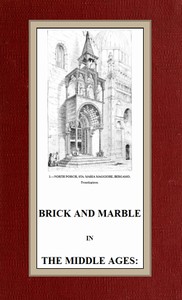
Brick and Marble in the Middle Ages: Notes of Tours in the North of Italy by Street
Forget dry history lectures. George Edmund Street's 'Brick and Marble in the Middle Ages' is a travelogue with a purpose. In the mid-1800s, Street, an architect, packed his bags and set off across Northern Italy. His goal wasn't just to see the famous sights; it was to understand them. He wanted to crack the code of medieval construction, to learn directly from the masters who built the cathedrals and city halls centuries before.
The Story
The book is his field notebook come to life. We follow him from Venice to Verona, Milan to Pisa. He doesn't just describe a beautiful facade; he gets up close. He examines the size and color of bricks, notes how marble is cut and fitted, and sketches the way arches are supported. He compares buildings, looking for patterns and regional styles. The "plot" is his journey of discovery. He shows how politics, available materials, and even trade routes influenced whether a town used sturdy local brick or imported luxurious marble. It's the story of how these silent, stone structures were actually a conversation between craftsmen, patrons, and the land itself.
Why You Should Read It
This book changes how you see things. After reading it, you won't just see an old wall; you'll see choices. You'll notice the practical reason for a brick foundation and the symbolic power of a marble entrance. Street's passion is contagious. He writes with the excitement of someone connecting dots no one else has fully traced. It’s not about memorizing dates; it's about gaining a new lens. You start to understand buildings as living records of problem-solving and artistic expression. It makes history feel tangible, literally built into the world around us.
Final Verdict
This is a perfect pick for the curious traveler, the amateur historian, or anyone who loves a good puzzle. If you've ever returned from a trip with photos of doors and windows and couldn't quite say why they fascinated you, this book is your answer. It's for readers who enjoy real-world detective stories and don't mind a book that moves at a thoughtful, observant pace. It pairs wonderfully with a cup of coffee and maybe a future trip to Italy, where you'll see everything with brand new, more knowledgeable eyes.
This historical work is free of copyright protections. You can copy, modify, and distribute it freely.







Nancy Walker
1 year agoThe formatting on this digital edition is flawless.