
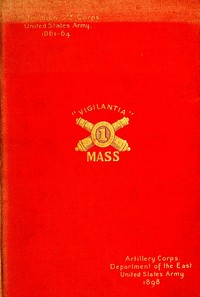
The First regiment Massachusetts heavy artillery, United States volunteers, in…
Most Civil War stories focus on the infantry charges and cavalry raids. James A. Frye's regimental history of the First Massachusetts Heavy Artillery does something different. It pulls back the curtain on the massive, often overlooked, machinery of war that kept the Union army functioning. This is the day-to-day reality of the soldiers tasked with a monumental job: protect Washington at all costs.
The Story
The book follows the regiment from its formation in 1861. These men signed up expecting to serve heavy artillery, manning the huge guns in the forts encircling Washington, D.C. For nearly three years, that's exactly what they did. Their war was a routine of guard duty, back-breaking drill, and the constant construction and maintenance of their forts. It was vital, thankless work. The conflict here isn't against a visible enemy army, but against boredom, disease, and the frustration of being so close to the war yet seemingly away from the action.
That all changes violently in 1864. To replace terrible losses in General Grant's army, the regiment is converted to infantry and thrown into the meat-grinder battles of the Wilderness and Spotsylvania. The transition is horrifying. Men who were experts with 30-pound cannonballs are now fighting for their lives in dense thickets with rifles. Frye details this shocking shift, the staggering casualties they suffered in mere minutes, and how the unit coped with this brutal new reality for the war's final year.
Why You Should Read It
This book is a powerful reminder that history is made by more than just the headline-making battles. It gives a voice to the thousands of soldiers whose service was defined by duty and endurance, not glory. Frye, who served in the unit, writes with a clear-eyed respect for his comrades. You feel the monotony of garrison life and the sheer terror of their first infantry engagement. It shatters the simple idea of a soldier's experience. The real strength of the narrative is in these contrasts—the disciplined world of the artilleryman versus the chaotic hell of the infantry line—and how the men adapted.
Final Verdict
Perfect for history buffs who feel they've read it all about Gettysburg and Antietam, and are hungry for the rest of the story. It's also great for anyone interested in the human experience of war, beyond the shooting. The writing is straightforward and packed with detail, feeling more like a dedicated veteran telling you his unit's story than a dry academic text. If you've ever walked the Civil War forts around Washington and wondered about the lives of the men stationed there, this is the book that answers your questions.
No rights are reserved for this publication. It is available for public use and education.
Kimberly Taylor
1 year agoThe clarity of the introduction set high expectations, and the chapter on advanced strategies offers insights I haven't seen elsewhere. I'm genuinely impressed by the quality of this digital edition.
Michael Garcia
8 months agoThis is an essential addition to any academic digital library.
Jessica Jones
1 year agoHaving explored several resources on this, I find that the way the author breaks down the core concepts is remarkably clear. I'll be recommending this to my students and colleagues alike.
Kimberly Thompson
8 months agoThe citations provided are a goldmine for further academic study.



Karen Davis
6 months agoIt’s refreshing to see such a high standard of digital publishing.