A
AbstraktMarketing
Guest
- Thread Author
- #1
How Container Shape Impacts Label Application Success
When a label fails on the line, the first instinct is to blame the label or the machine. Maybe the adhesive is wrong. Maybe the settings are off. Maybe the labeling machine is overdue for calibration. All of those can be true, but there’s another factor that quietly drives success or failure long before the roll ever hits the production line.
The shape of a bottle, jar, can, jug, or tube affects nearly every part of label application, from how a label dispenses and wraps to whether it stays smooth, aligned, and readable after it leaves the facility. If your container has curves, tapers, handles, or textured zones, label performance becomes a geometry problem as much as a materials problem.
This guide breaks down how common container shapes influence label application outcomes, the most frequent failure points caused by non-standard containers, and how to build a container labeling strategy that works with your equipment instead of fighting it.
Why Container Shape Matters in Label Application
A label is a flexible material being asked to do three things at once:
- Dispense cleanly from a liner
- Apply evenly at speed
- Conform to a surface without distortion
Flat, consistent surfaces make this easy. Complex shapes introduce tension, uneven pressure, and shifting alignment points. That’s when wrinkles, bubbles, flagging edges, and skewed placement start showing up.
Container shape affects:
- Contact area: how much surface the adhesive can grip
- Wrap behavior: how smoothly the label conforms as it’s applied
- Alignment control: how reliably the container can be indexed on the line
- Dispense timing: whether the label meets the container at the correct moment
- Visual accuracy: whether graphics stay centered and readable once wrapped
If you’ve ever asked, “Why do labels look perfect in samples but fail during production?” container geometry is often the missing link.
US Tape & Label supports manufacturers with label products engineered for reliable label application across curved, tapered, and non-standard containers. Explore label materials and construction options that help improve alignment, reduce application defects, and keep your production line running smoothly.
Our Label Products
The Easiest Container Shapes for Label Application
Some shapes are naturally label-friendly because they provide predictable contact and repeatable positioning. These tend to run smoothly on most labeling equipment with minimal adjustment.
Straight-Walled Cylinders
Think cans, straight bottles, many supplement containers. Cylinders offer consistent curvature, making wrap labels easy to apply with uniform tension.
Why they work well:
- Even pressure across the label
- Predictable wrap point
- Fewer variables for the labeling machine to manage
Flat Panels and Square Containers
These can be excellent for front-and-back labeling or panel labeling, as long as edges are sharp and consistent.
Why they work well:
- Easy alignment with sensors or guides
- Clean presentation for branding
- Strong contact on the flat surface
That said, square containers can introduce challenges at corners if labels extend too close to the edges.
The Hardest Shapes to Label (and Why)
Non-standard containers are often chosen for shelf appeal, handling, or differentiation. Those goals are valid, but they create real manufacturing implications. Complex shapes increase the odds of application defects, especially at speed.
Tapered Bottles and Jars
A tapered container changes diameter from top to bottom. That means a label trying to lie flat is forced to stretch or compress as it wraps.
Common issues:
- Wrinkles along the top or bottom edge
- Bubbles in the middle of the panel
- Label drift as the container rotates
Tapered shapes are one of the most common causes of “mystery wrinkles” in label application.
Curved and Contoured Surfaces
Curves can be subtle or dramatic, but any change in surface angle affects how adhesive bonds during application.
Common issues:
- Edge lifting on compound curves
- Inconsistent adhesion due to pressure drop-off
- Skewed graphics because the label is pulled off axis
Handles, Indents, and Grip Zones
Plastic jugs and handled containers introduce interruptions in the label panel. Even if a label avoids the handle, nearby shape changes can alter how the label lays down.
Common issues:
- Bridging across an indent, then collapsing later
- Peeling at the edges near a recessed area
- Misalignment caused by irregular container indexing
Textured Containers
Embossed glass, ribbed plastic, and matte textures can reduce adhesive contact area.
Common issues:
- Micro-bubbles from trapped air
- Poor long-term adhesion
- Inconsistent appearance that looks like print defects
These shapes can still be labeled successfully, but they require more intentional planning for container labeling and production line setup.
How Shape Affects Label Adhesion
Adhesion is often discussed as a materials topic, but shape plays a major role in whether the adhesive can do its job.
Three shape-driven adhesion challenges show up repeatedly:
- Uneven pressure: the label presses firmly in some areas and barely touches in others
- Adhesive shear stress: as the label wraps, tension tries to pull it back off the surface
- Reduced contact area: texture, ribs, indents, and curves decrease the adhesive’s grip
On a high-speed production line, even small adhesion weaknesses can grow into large-scale issues. A label might look fine immediately, then lift after cooling, stacking, or exposure to humidity.
Printing Precision Matters More on Complex Containers
On a flat, forgiving container, small shifts may go unnoticed. On a tapered bottle or a tight contour, tiny inaccuracies become obvious fast.
Precision matters because:
- The label must be cut consistently to match the labelable panel
- Graphics must align with application points, seams, or front-facing zones
- Tolerances shrink when the container gives you less room to work
When you’re trying to improve label accuracy on uniquely shaped bottles, it helps to treat print layout, die lines, and application specs as one connected system. Misalignment is often the result of multiple small factors stacking together, not one big failure.
The Labeling Machine Perspective: What the Line Needs from the Container
From the point of view of a labeling machine, consistency is everything. The machine needs predictable container presentation, stable rotation, and a clear reference point for label placement.
Key questions operations teams should ask:
- Can the container be held and indexed consistently at speed?
- Does the container rotate smoothly, or does it wobble?
- Are there features that interfere with sensors or guides?
- Does the label have enough flat panel space to land cleanly?
Should packaging design consider label machinery requirements? In most manufacturing settings, yes. Even small container changes can require major production line adjustments, especially when the line is tuned for a particular footprint.
Practical Ways to Improve Label Application on Non-Standard Containers
Container shape might be fixed, but successful label application is still achievable with the right approach. These are common improvement paths that help reduce defects without slowing production to a crawl.
Identify and Protect the Labelable Panel
Define the true “safe zone” on the container, including curvature shifts, seams, ribs, and grip zones. Treat this as a hard boundary for label size and placement.
Match Label Construction to Shape Demands
Some materials conform better than others, and some adhesives tolerate curvature changes more effectively. Shape-driven applications often benefit from more flexible films and adhesives designed for challenging surfaces.
Adjust Application Method, Not Just Settings
Sometimes the fix is not simply turning knobs. It can involve changing wrap technique, pressure roller configuration, or container handling to reduce tension and improve contact.
Slow Down Strategically During Troubleshooting
Temporary speed reductions can help isolate whether the issue is timing, tension, or container indexing. Once the cause is identified, you can tune back up without guessing.
Validate With Real Production Conditions
A sample test in ideal conditions can be misleading. Performance should be validated under actual humidity, temperature, and handling expectations.
Building a Smarter Container Labeling Strategy
The strongest results come when packaging, operations, and labeling considerations are aligned early. Container labeling performs best when the label, the surface, and the production line are treated as a coordinated system.
A practical label application strategy includes:
- Evaluating container geometry before finalizing label size and placement
- Accounting for how the labeling machine handles indexing and rotation
- Planning for moisture, condensation, and handling conditions
- Testing under real production conditions, not just bench samples
Reduce Wrinkles, Bubbles, and Misalignment With Expert Support
At US Tape & Label, we help manufacturers reduce label issues by bringing real-world production knowledge into the conversation early. That includes understanding how container shape influences label application performance, how print precision impacts alignment, and what it takes to run labels reliably on a production line.
If you’re troubleshooting wrinkles, bubbles, misalignment, or inconsistent placement on uniquely shaped containers, our team can help you evaluate the full system and identify a path to smoother, more consistent results.
Share This Post
- Share on Facebook
- Share on X
- Share on WhatsApp
- Share on Pinterest
- Share on LinkedIn
- Share on Tumblr
- Share on Vk
- Share on Reddit
- Share by Mail
More Like This

Label Solutions/Types
How Pressure-Sensitive Labels Support Short-Run and Seasonal Product Launches
https://ustl.com/wp-content/uploads...t-Short-Run-and-Seasonal-Product-Launches.jpg 1250 2000 AbstraktMarketing https://ustl.com/wp-content/uploads/2026/10/October-2026-Logo-300x133.jpg AbstraktMarketing2026-07-30 14:36:052026-07-30 14:36:10How Pressure-Sensitive Labels Support Short-Run and Seasonal Product Launches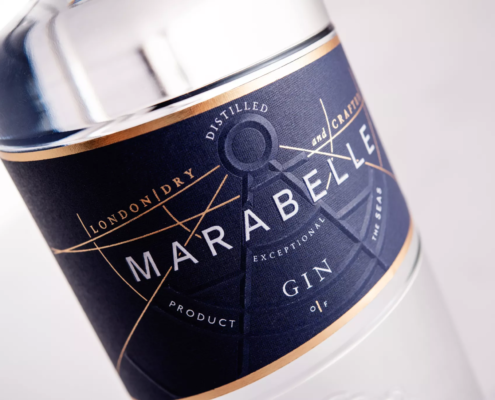
Label Solutions/Types
Waterproof Labels: Materials, Inks, and Industries That Rely on Them
https://ustl.com/wp-content/uploads/2024/03/embossed-labels-1.webp 1367 2048 AbstraktMarketing https://ustl.com/wp-content/uploads/2026/10/October-2026-Logo-300x133.jpg AbstraktMarketing2026-06-03 17:40:402026-06-03 17:40:43Waterproof Labels: Materials, Inks, and Industries That Rely on Them
Label Solutions/Types
What Is a Label Face Stock?
https://ustl.com/wp-content/uploads/2025/11/Pressure-Sensitive-Labels.jpg 1250 2000 AbstraktMarketing https://ustl.com/wp-content/uploads/2026/10/October-2026-Logo-300x133.jpg AbstraktMarketing2026-06-03 17:36:182026-06-03 17:36:27What Is a Label Face Stock?
Label Solutions/Types
Waterproof Labels for Health & Beauty: Best Materials for Bathroom Environments
https://ustl.com/wp-content/uploads...ing-skincare-or-body-care-liquid-products.jpg 1250 2000 AbstraktMarketing https://ustl.com/wp-content/uploads/2026/10/October-2026-Logo-300x133.jpg AbstraktMarketing2026-03-25 18:42:572026-06-02 15:26:58Waterproof Labels for Health & Beauty: Best Materials for Bathroom Environments
Label Solutions/Types
Adhesive Labels: How to Choose the Right Adhesive for Your Container Material
https://ustl.com/wp-content/uploads/2026/03/A-Guide-to-Label-Adhesives.jpg 1250 2000 AbstraktMarketing https://ustl.com/wp-content/uploads/2026/10/October-2026-Logo-300x133.jpg AbstraktMarketing2026-03-09 10:31:282026-07-30 14:36:25Adhesive Labels: How to Choose the Right Adhesive for Your Container Material
Label Solutions/Types
The Competitive Edge Full-Service Label Solutions Provide Regulated Industries
https://ustl.com/wp-content/uploads/2025/11/Tape-Labels-being-printed.jpg 1250 2000 AbstraktMarketing https://ustl.com/wp-content/uploads/2026/10/October-2026-Logo-300x133.jpg AbstraktMarketing2025-11-06 11:54:462026-06-02 15:27:01The Competitive Edge Full-Service Label Solutions Provide Regulated Industries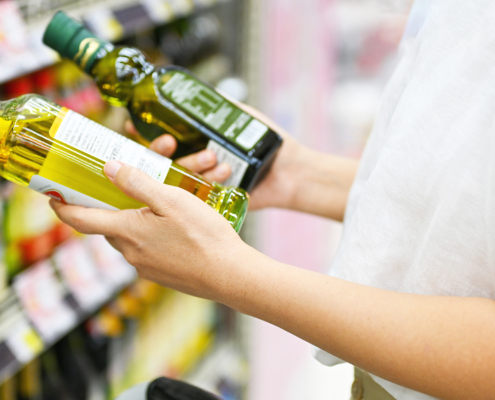
Branding, Label Solutions/Types
The Impact of Product Labeling on Consumer Purchasing Decisions
https://ustl.com/wp-content/uploads/2025/02/Impact-of-Labeling-on-Consumer-Purchasing-Decisions_.jpg 1250 2000 AbstraktMarketing https://ustl.com/wp-content/uploads/2026/10/October-2026-Logo-300x133.jpg AbstraktMarketing2025-02-05 07:27:452026-08-20 14:30:47The Impact of Product Labeling on Consumer Purchasing Decisions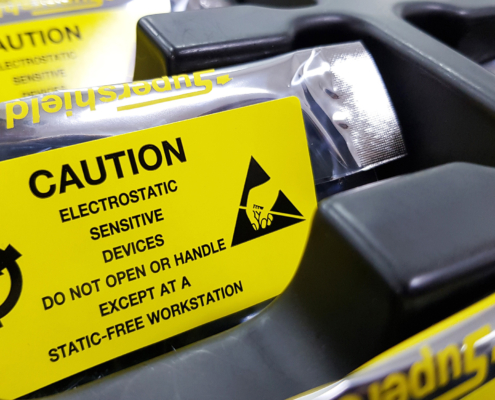
Label Solutions/Types, Specialty Labels
Harsh Environment Labels: Everything You Need to Know
https://ustl.com/wp-content/uploads/2025/02/Harsh-Environment-Labeling.jpg 1250 2000 AbstraktMarketing https://ustl.com/wp-content/uploads/2026/10/October-2026-Logo-300x133.jpg AbstraktMarketing2025-02-05 07:15:422026-06-02 15:27:03Harsh Environment Labels: Everything You Need to Know
Label Solutions/Types
Matte vs. Glossy: Which Label Finish Is Right for Your Custom Project?
https://ustl.com/wp-content/uploads...and-nutrition-information-on-juice-bottle.jpg 1250 2000 AbstraktMarketing https://ustl.com/wp-content/uploads/2026/10/October-2026-Logo-300x133.jpg AbstraktMarketing2024-12-18 09:01:192026-06-02 15:27:04Matte vs. Glossy: Which Label Finish Is Right for Your Custom Project?Previous
Previous Next
Next
The post How Container Shape Impacts Label Application Success appeared first on U.S. Tape & Label.