1

Memorandum to the Government of the United States on the Recognition of the Ukrainian People's Republic — A Closer Reading
(0 User reviews)
496
Project Gutenberg
2010
Not confirmed
World War, 1914-1918 -- Territorial questions -- Ukraine
Readers of public-domain and historical texts
Project Gutenberg digital edition
en
Edition facts
Words
7,995
Reading time
35 min
Text sections
1
Memorandum to the Government of the United States on the Recognition of the Ukrainian People's Republic — A Closer Reading can be approached with a clearer sense of reading commitment from its source measurements: 7,995 words, 35 min estimated reading time, and 1 detected text section.
The text analysis averages about 23.2 words per sentence, while the detected sections provide another way to judge how the source is divided.
Project Gutenberg metadata also associates the work with “World War, 1914-1918 -- Territorial questions -- Ukraine,” connecting these edition facts with the source record’s subject description.
Source:
Project Gutenberg record #33551
A 1920 diplomatic memorandum by Ukrainian representative IUliian Bachynskyi to the U.S. Secretary of State, arguing for recognition of the Ukrainian People's Republic based on ethnic distinctiveness, historical claims, and wartime self-determination.
Editorial Edition Score
4.3/5
★★★★★
★★★★★
Calculated from edition completeness, EPUB availability, text structure and catalogue metadata. Not a user rating.
How this score is calculated
- Description quality20 pts
- Title & short description10 pts
- Source metadata20 pts
- Text length15 pts
- Chapters / structure15 pts
- EPUB file integrity20 pts
Total of 100 points, scaled to a 2.5-5.0 range. Editions with an empty description or a missing EPUB file are not scored.
Edition quality
Public-domain source text
Read the source text
The source text is kept in the dedicated reader, separate from this catalogue record and its commentary.
This 1920 memorandum, addressed to the U.S. Secretary of State by IUliian Bachynskyi, representative of the Ukrainian People's Republic, opens with a formal request for recognition of Ukraine as a free state. The document is structured as a legal and historical brief, listing five principal grounds for independence: ethnic identity, territorial continuity, historical struggle, economic self-interest, and the need to end Polish-Russian rivalry over Ukraine. Bachynskyi explicitly counters the popular American view that Ukraine is merely a Russian province, citing anthropological and linguistic evidence to argue that Ukrainians form a distinct racial and cultural unit.
Ethnographic and Linguistic Arguments
The memorandum grounds Ukraine's claim to statehood in what it calls the 'canons of ethnology and history.' Bachynskyi asserts that Ukrainians constitute a 'physical type clearly different' from Great Russians, White Ruthenians, or Poles—a claim he attributes to 'leading anthropologists, even among the Russians.' He emphasizes that the Ukrainian language is a 'separate Slavic tongue, not merely a dialect of Great Russian,' and that cultural and temperamental peculiarities permeate the nation's 'whole social and moral nature.' These assertions are presented as rebuttals to the prevailing misapprehension in America that Ukraine is a Russian province. The text does not provide specific citations for these anthropological claims, but the rhetorical strategy is clear: to establish Ukraine as a distinct nation deserving of sovereignty under Wilsonian self-determination.
Economic Infrastructure and Development
Beyond ethnic arguments, the memorandum devotes substantial attention to Ukraine's economic potential and needs. Bachynskyi details a program of internal improvements: regulation of navigable rivers, exploitation of hydroelectric power from the Dnieper rapids, construction of central power stations, modernization of mining, erection of grain elevators, and scientific management of agriculture, milling, and sugar refining. This section reads as a development prospectus, arguing that Ukraine's resources have been exploited by neighbors and that independence would allow rational, modern economic organization. The emphasis on infrastructure—railways, rivers, power stations—reflects a technocratic vision of state-building, linking political sovereignty to economic modernization.
Evidence of Popular Will and the 'Plebiscite of Blood'
Bachynskyi counters the charge that Ukrainian nationalism is artificially stimulated by pointing to concrete demonstrations of popular support. He cites the Central Rada's 1917 proclamation of independence, a subsequent congress of workers and peasants that affirmed the Rada by a vote of 2,000 to 70, and the 1917 election to the All-Russian Constituent Assembly, in which 75% of Ukraine's 230 deputies were Ukrainian nationalists. The memorandum also notes that even Ukrainian communists initially opposed Russian Bolshevik invasion, and that the so-called Ukrainian Soviet Government was headed by a Romanian, Rakovsky, and functioned as a 'local agency of Moscow.' The phrase 'plebiscite of blood' encapsulates the argument that prolonged armed struggle—against Bolsheviks, anti-Bolsheviks, Germans, and Denikin's forces—constitutes the 'most sincere evidence of the will to self-determination.'
Readers should note that this memorandum is a diplomatic artifact, not a neutral history. It presents a carefully constructed case for recognition, omitting internal divisions or complexities that might weaken its argument. The document's value lies in its articulation of a specific political claim at a critical historical moment, using the language of self-determination and economic modernity. For context, consult contemporaneous accounts of the Ukrainian-Soviet War and the Paris Peace Conference.
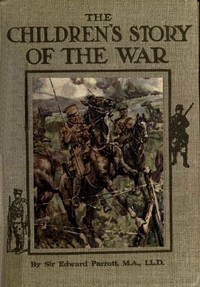
Reading the dry, hopeful words of Bachynskyi’s 1920 memorandum, I felt the weight of a nation pleading for a place on the map—so fragile, so earnest. It reminded me, oddly, of another kind of plea: the schoolchildren in The Childrens' Story of the War, Volume 2 (of 10) From the Battle of Mons to the Fall of Antwerp. — A Closer Reading. Both capture a moment when ordinary hopes were caught in history's brutal tide.
There are no reviews for this eBook.
There are no comments for this eBook.
Reader reflection
How will you remember this book?
Save your reaction, strongest insight, and memorable passage.
Your progress
0
/
10
2
How did the book work for you overall?
3
Would you recommend this book to another reader?
4
How much effort did this book require?
5
Which aspect of the book did you value most?
6
Do you expect to return to this book?
7
Did it raise ideas you would like to talk about?
8
How clear did the writing feel?
9
In one sentence, what did you learn?
10