1

The Pentecost of Calamity — Text and Context
(0 User reviews)
1703
Project Gutenberg
2010
Not confirmed
World War, 1914-1918; Germany
Readers of public-domain and historical texts
Project Gutenberg digital edition
en
Edition facts
Words
16,104
Reading time
71 min
Text sections
2
This digital edition of The Pentecost of Calamity — Text and Context is described by source-level measurements including 16,104 words, 1 hr 11 min estimated reading time, and 2 detected text sections.
The text analysis averages about 18.8 words per sentence, while the detected sections provide another way to judge how the source is divided.
Project Gutenberg metadata also associates the work with “World War, 1914-1918,” connecting these edition facts with the source record’s subject description.
Source:
Project Gutenberg record #32098
Owen Wister's 1915 polemic examines German militarism through personal memory and compiled Prussian statements, arguing that a 'slow fire' of nationalism led to World War I. The text blends diary excerpts, cultural critique, and a composite 'Prussian Creed' drawn from leaders and thinkers.
Editorial Edition Score
4.5/5
★★★★★
★★★★★
Calculated from edition completeness, EPUB availability, text structure and catalogue metadata. Not a user rating.
How this score is calculated
- Description quality20 pts
- Title & short description10 pts
- Source metadata20 pts
- Text length15 pts
- Chapters / structure15 pts
- EPUB file integrity20 pts
Total of 100 points, scaled to a 2.5-5.0 range. Editions with an empty description or a missing EPUB file are not scored.
Edition quality
Public-domain source text
Read the source text
The source text is kept in the dedicated reader, separate from this catalogue record and its commentary.
Wister opens with a personal memory: as a ten-year-old in 1870, he watched twenty-one locomotives carrying German troops to the Franco-Prussian War. This image of 'ominous and sinister' mobilization returns decades later when, in June 1914, he records in his diary an 'innocent' impression of Germans as 'massive, on-going, steady.' The gap between that peaceful observation and the war that followed frames the book's argument. Wister uses sensory triggers—music, perfume, dates—to show how the past resurfaces, then turns to a diary entry from June 9, 1914, noting a 'slow fire' at work in Germany. He admits his own ignorance, and that of the peasants he met, setting up a contrast between everyday life and the catastrophe to come.
From Diary to Diagnosis
The book's early sections rely on Wister's 1914 travels in Germany. He describes a 'beautiful, peaceful scene' that he 'never could forget,' yet the diary entry hints at unease: 'Some unifying slow fire is at work in them.' Wister does not claim to have predicted war; instead, he emphasizes his own 'deeply innocent' American perspective. This self-awareness shapes the narrative. He contrasts the pastoral Rhine with the military trains of 1870, suggesting that German culture contained both. Readers should note how Wister uses his personal observations as evidence, not prophecy. The diary becomes a tool to measure change: what seemed harmless in June 1914 reads differently after August. The text does not offer a complete travelogue—only fragments that serve his argument about national character.
The Shattered Vase: Culture and Militarism
Wister introduces a metaphor from Goethe: an oak tree planted in a costly vase, whose roots crack the container. He applies this to Germany, claiming that Prussia, like the oak, has 'cracked the Empire.' The image appears after he describes a 'cultivated student, a noble nature' turned into a 'gibbering maniac' by Prussianization. This section compresses a complex argument: German culture (the vase) contained Greek and Christian traditions, but Prussian militarism (the oak) destroyed it. Wister does not develop this fully in the excerpts—the metaphor stands as a claim rather than a proof. Readers should watch how he moves between cultural praise and condemnation, using the student as a synecdoche for a generation. The tone shifts from elegy to indictment, but the evidence remains selective.
Assembling the Prussian Creed
Chapter XI presents a 'composite statement' of Prussianism, compiled from the Kaiser, generals, professors, editors, and Nietzsche. Wister arranges sentences into a manifesto: 'Might is right,' 'War in itself is a good thing,' 'The Belgians should not be shot dead—they should be ... left as to make impossible all hope of recovery.' He does not name individual sources for each line, but attributes the whole to 'utterances of Prussians' made before and during the war. The effect is a relentless list, without narrative interruption. Readers should treat this as a constructed document, not a verbatim transcript. Wister's method—cutting and pasting from multiple voices—creates a single monstrous speaker. The creed covers territorial expansion, racial hierarchy, and the suppression of other nations, ending with the claim that German should replace English as the world language.
Rhetoric of Condemnation
Wister's closing sections shift from compilation to direct attack. He calls the creed 'gibbering' and describes its believers as 'maniacs.' The language becomes visceral: 'flung into a caldron of blood.' He does not offer counter-arguments or nuance; instead, he presents the creed as self-evidently evil. The excerpts break off before the book's end, so the full rhetorical arc is unclear. However, the pattern is consistent: personal memory, cultural analysis, documentary evidence, then moral outrage. Wister writes as an American observer, not a participant, and his tone carries the urgency of 1915. Readers should note that he does not discuss Allied war aims or the causes of the war beyond German aggression. The book is a polemic, not a history, and its value lies in its contemporary voice and the assembly of Prussian statements.
Wister's book is best read as a primary source from 1915, capturing an American intellectual's response to the outbreak of World War I. The diary entries and the compiled creed offer direct access to wartime rhetoric, but the argument is shaped by emotion and selection. Readers interested in propaganda, national identity, or the history of anti-German sentiment will find the text revealing. Approach it as a document of its moment, not a balanced account.
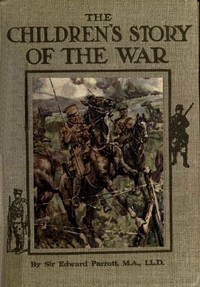
That rainy afternoon, The Pentecost of Calamity left me sitting with the weight of Wister’s slow fire—how quiet conviction hardens into destruction. I set it down, restless, and drifted to The Childrens' Story of the War, Volume 2 (of 10) From the Battle of Mons to the Fall of Antwerp. — A Closer Reading, where the same terrible logic arrives as plain dates, and I felt the chill of seeing it through younger eyes.
There are no reviews for this eBook.
There are no comments for this eBook.
Reader reflection
What was your reading experience?
Capture what you thought, learned, and would like to remember.
Your progress
0
/
10
2
Was reading this book enjoyable?
3
Would you recommend this book to another reader?
4
How demanding did the text feel?
5
Did this book create an emotional response?
6
Could you follow the author’s main argument?
7
Would you like to discuss this book with someone?
8
Which element worked best for you?
9
What is the main idea you are taking away?
10