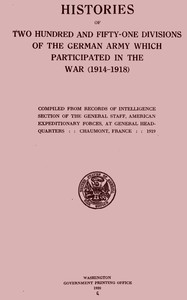
Histories of two hundred and fifty-one divisions of the German army which participated in the war (1914-1918) — Text and Context
Edition facts
Histories of two hundred and fifty-one divisions of the German army which participated in the war (1914-1918) — Text and Context can be approached with a clearer sense of reading commitment from its source measurements: 242,212 words, 17 hr 34 min estimated reading time, and 254 detected text sections.
The text analysis averages about 14.2 words per sentence, while the detected sections provide another way to judge how the source is divided.
Project Gutenberg metadata also associates the work with “World War, 1914-1918 -- Germany,” connecting these edition facts with the source record’s subject description.
Calculated from edition completeness, EPUB availability, text structure and catalogue metadata. Not a user rating.
How this score is calculated
- Description quality20 pts
- Title & short description10 pts
- Source metadata20 pts
- Text length15 pts
- Chapters / structure15 pts
- EPUB file integrity20 pts
Total of 100 points, scaled to a 2.5-5.0 range. Editions with an empty description or a missing EPUB file are not scored.
Read the Text
The Alpine Corps was considered one of the best German units. It showed its worth by retaking the village of Hallu on the 11th of August, and while counterattacking at Moislains on the 2d of September. Nevertheless, the morale was lowered. The Alpine Corps comprised about 3,500 Infantry combatants early in August. It lost about 700 prisoners in August and September.
Bavarian Cavalry Division.
───────────────────────┬─────────────────────────────────────────────── │ 1918 ───────────────────────┼───────────────────────┬─────────────────────── │ Brigade. │ Regiment. ───────────────────────┼───────────────────────┼─────────────────────── Cavalry. │1 Bav. Cav. │1 Heavy Reiter. │4 Bav. Cav. │1 Bav. Ulan. │ │2 Bav. Ulan. │5 Bav. Cav. │1 Bav. Light Cav. │ │6 Bav. Light Cav. ───────────────────────┼───────────────────────┴─────────────────────── Artillery. │5 Bav. Horse Art. Abt. ───────────────────────┼─────────────────────────────────────────────── Engineers and Liaisons.│Pion. Detch. │1 Bav. M. G. Btry. │300 Bav. T. M. Co. ───────────────────────┼─────────────────────────────────────────────── Attached. │Glatz Landst. Inf. Btn. (VI/9). ───────────────────────┴───────────────────────────────────────────────
1. The units of this division were used on police duty in the Ukraine and in Roumania in the spring of 1918. A part of the division was serving in the Crimea in the early summer. It continued in that general area through the year.
The division was rated as fourth class.
Bavarian Ersatz Division.
─────────────┬───────────────────┬───────────────────┬─────────────────── │ 1914 │ 1915 │ 1916 ─────────────┼─────────┬─────────┼─────────┬─────────┼─────────┬───────── │Brigade. │Regiment.│Brigade. │Regiment.│Brigade. │Regiment. ─────────────┼─────────┼─────────┼─────────┼─────────┼─────────┼───────── Infantry. │3 Bav. │4 Bav. │3 Bav. │4 Bav. │3 Bav. │4 Bav. │ Res. │ Res. │ Res. │ Res. │ Res. │ Res. │ │15 Bav. │ │15 Bav. │ │15 Bav. │ │ Res. │ │ Res. │ │ Res. │59 Ldw. │28 Ers. │59 Ldw. │28 Ers. │59 Ldw. │28 Ers. │ │ │ │ │ │ │ │120 Ldw. │ │120 Ldw. │ │81 Ldw. ─────────────┼─────────┴─────────┼─────────┴─────────┼─────────┴───────── Cavalry. │ │ │Ers. Cav. Detch. (1 │ │ │ Bav. C. Dist.). │ │ │ │ │ │ │ │ │ ─────────────┼───────────────────┼───────────────────┼─────────────────── Artillery. │ │1 Ers. Abt. F. A. │ │ │ (1 Bav. C. D.). │ │ │2 Ers. Btry. 8 Bav.│ │ │ F. A. Rgt. │ ─────────────┼───────────────────┼───────────────────┼─────────────────── Engineers and│ │ │2 Ldw. Pion. Co. (2 Liaisons. │ │ │ Bav. C. D.). │ │ │3 Ldw. Pion. Co. (3 │ │ │ Bav. C. D.). │ │ │1 Bav. Mining Co. │ │ │ │ │ │1 Bav. Heavy T. M. │ │ │ Detch. │ │ │ │ │ │ │ │ │ │ │ │ │ │ │ │ │ │ ─────────────┼───────────────────┼───────────────────┼─────────────────── Medical and │ │ │ Veterinary.│ │ │ │ │ │ │ │ │ │ │ │ │ │ │ │ │ │ │ │ │ ─────────────┼───────────────────┼───────────────────┼─────────────────── Transport │ │ │ ─────────────┴───────────────────┴───────────────────┴───────────────────
─────────────┬───────────────────┬─────────────────── │ 1917 │ 1918[1] ─────────────┼─────────┬─────────┼─────────┬───────── │Brigade. │Regiment.│Brigade. │Regiment. ─────────────┼─────────┼─────────┼─────────┼───────── Infantry. │3 Bav. │4 Bav. │3 Bav. │18 Bav. │ Res. │ Res. │ Res. │ Res. │ │15 Bav. │ │4 Bav. │ │ Res. │ │ Res. │ │28 Ers. │ │15 Bav. │ │ │ │ Res. │ │ │ │ ─────────────┼─────────┴─────────┼─────────┴───────── Cavalry. │1 Sqn. 6 Bav. Res. │1 Sqn. 6 Bav. Res. │ Schutz. Cav. Rgt.│ Cav. Schutzen │ │ Rgt. │1 Bav. C. Dist. │ │ Ers. Cav. Abt. │ ─────────────┼───────────────────┼─────────────────── Artillery. │Art. Command: │19 Bav. Art. │ │ Command: │ Bav. Ers. F. A. │ Bav. Ers. F. A. │ Rgt. │ Rgt. ─────────────┼───────────────────┼─────────────────── Engineers and│Pion. Btn.: │13 Bav. Pion. Btn. Liaisons. │ │ │ 4 Bav. Ldw. Pion. │4 Bav. Ldw. Pion. │ Co. │ Co. │ 6 Bav. Ldw. Pion. │6 Bav. Ldw. Pion. │ Co. │ Co. │ 1 Bav. Mining Co. │5 Bav. Res. │ │ Searchlight │ │ Section. │ 100 Bav. T. M. Co.│100 Bav. T. M. Co. │ 5 Bav. Res. │551 Bav. Tel. │ Searchlight │ Detch. │ Section. │ │ 551 Tel. Detch. │ ─────────────┼───────────────────┼─────────────────── Medical and │9 Bav. Ambulance │9 Bav. Ambulance Veterinary.│ Co. │ Co. │40 Bav. Field │40 Bav. Field │ Hospital. │ Hospital. │41 Bav. Field │41 Bav. Field │ Hospital. │ Hospital. │33 Bav. Vet. │33 Bav. Vet. │ Hospital. │ Hospital. ─────────────┼───────────────────┼─────────────────── Transport │767 M. T. Col. │767 M. T. Col. ─────────────┴───────────────────┴─────────────────── Footnote 1:
Composition at the time of dissolution.
The Bavarian Ersatz Division consisted, at the outbreak of the war, of the three mixed Bavarian Ersatz brigades, Nos. 1, 5, 9 (12 battalions), which detrained on August 17 and 18 in the region of Schelestadt. But afterwards this designation indicated a composite division (Benzino Division) formed from the 3d Bavarian Reserve Brigade and the 59th Landwehr Brigade (28th Ersatz, Baden) and the 120th Landwehr Regiment (Wurttemberg).
1. The Benzino Division was first engaged in the Vosges (St. Marie Ridge, St. Die, Laveline) until September.
2. After a rest in the Valley of the Bruche, it entrained at the end of September for Mars-la-Tour and reinforced the 3d Bavarian Corps in the St. Mihiel area.
1. The Benzino Division occupied the area east of St. Mihiel (Spada to Apremont) during the entire year 1915. In November it took the name of Bavarian Ersatz Division.
2. The division rested in Lorraine from December, 1915, to the end of February, 1916.
At the beginning of February, 1916, the 120th Landwehr Regiment was replaced by a Prussian Regiment, the 81st Landwehr.
1. On February 28, 1916, the Bavarian Ersatz Division took over the sector of Fresnes-en-Woëvre-Ronvaux. It remained there until the end of October, 1916. On October 17, the 4th Bavarian Reserve Regiment left the division temporarily to go to Galicia, to the 199th Division, and came back in November.
2. From October 25 to November 15 the Bavarian Ersatz Division took part in the battle of the Somme east of Gueudecourt, with the exception of the 81st Landwehr, which was definitely detached from the division.
3. Transferred to the Aisne, it went into line in the vicinity of Craonne at the end of November.
1. On the Aisne front, east of Craonne, the Bavarian Ersatz Division received the French offensive of April, and its conduct gained the order “Pour le Mérite” for its general.
2. Relieved at the end of April, it occupied a sector in the Apremont Wood from the middle of May to the end of August.
3. On September 1 it was in Belgium, where it was engaged on both sides of the Ypres-Menin road until September 25. The 3d Battalion of the 4th Bavarian Reserve Regiment was almost destroyed on September 20.
4. At the beginning of October the division was transferred to the eastern front and sent into line southeast of Tarnopol in December.
5. At the end of autumn 1917, the 28th Ersatz Regiment (Baden) was withdrawn from the division and replaced by the 18th Bavarian Reserve. The division was then entirely Bavarian.
The Bavarian Ersatz Division is recruited from the 1st and 2d Bavarian Corps districts.
The Bavarian Ersatz Division is a very mediocre division.
1. The division held the quiet Verdun sector until July 12, when it was relieved by the 231st Division.
2. It was moved to the Vesle front and on July 25 relieved the 40th Division near Oulchy-le-Chateau. It remained in this sector until August 12, when it was withdrawn and sent to rest in the vicinity of Maubeuge.
3. On September 1 it proceeded to Mauchault and during the first days of September relieved the 88th Division in line near Perthes. It was in the fighting between September 23 and October 3 in Champagne, losing about 2,000 men in that engagement.
4. The division was so reduced in strength that it was dissolved shortly after its retirement from line in October. The 18th Bavarian Reserve Regiment was dissolved and the men drafted to the 15th Bavarian Division. The 15th Bavarian Reserve Regiment was also dissolved.
The division was rated as third class. It was used only in defensive sectors during 1918.
─────────────┬───────────────────┬───────────────────┬─────────────────── │ 1917 │ 1918 │ 1919 ─────────────┼─────────┬─────────┼─────────┬─────────┼─────────┬───────── │Brigade. │Regiment.│Brigade. │Regiment.│Brigade. │Regiment. ─────────────┼─────────┼─────────┼─────────┼─────────┼─────────┼───────── Infantry. │ │11 Jag. │ │ │5 Ers. │11 Jag. │ │12 Jag. │ │ │ │12 Jag. │ │13 Jag. │ │ │ │13 Jag. ─────────────┼─────────┴─────────┼─────────┴─────────┼─────────┴───────── Cavalry. │ │ │1 Sqn. 10 Drag. │ │ │ Rgt. │ │ │Staff, 2 Ulan Rgt. │ │ │Staff, 8 Bav. Light │ │ │ Cav. Rgt. ─────────────┼───────────────────┼───────────────────┼─────────────────── Artillery. │203 F. A. Rgt. │24 F. A. Rgt. │224 Art. Command: │ (Wurtt.) │ │ │ │ │ 24 F. A. Rgt. │ │ │ 3 Abt. 24 Res. Ft. │ │ │ A. Rgt. │ │ │ 780 Light Am. Col. │ │ │ 793 Light Am. Col. │ │ │ 1,050 Light Am. │ │ │ Col. ─────────────┼───────────────────┼───────────────────┼─────────────────── Engineers and│ │ │422 Pion. Btn.: Liaisons. │ │ │ │ │ │ Gd. Pion. Detch. │ │ │ (Casuals). │ │ │ 5 Pion. Detch. │ │ │ (Casuals). │ │ │ 9 Pion. Detch. │ │ │ (Casuals). │ │ │ 174 T. M. Co. │ │ │ 215 Searchlight │ │ │ Section. │ │ │901 Signal Command: │ │ │ 805 Tel. Detch. │ │ │ 901 Tel. Detch. │ │ │ 48 Wireless Detch. ─────────────┼───────────────────┼───────────────────┼─────────────────── Medical and │524 Ambulance Co. │ │241 Ambulance Co. Veterinary.│ │ │ │ │ │34 Field Hospital. │ │ │16 Res. Field │ │ │ Hospital. │ │ │143 Vet. Hospital. ─────────────┼───────────────────┼───────────────────┼─────────────────── Transport. │ │ │670 M. T. Col. ─────────────┴───────────────────┴───────────────────┴───────────────────
The Jaeger Division appears to have been formed about November, 1917.
In November and December the Division was engaged on the Italian front at Monte-Tomba. Relieved at the beginning of January, 1918, it was sent to rest.
The Jaeger Division is a very good Division.
1. The division again entrained March 20 and was transported to the area northeast of St. Quentin by way of Strasbourg, Treves, Cologne, Liege, Namur, Charleroi, Maubeuge, Bohain. From there it marched to the region south of Chaulnes and rested three weeks.
2. It was in line in the Villers-Bretonneux sector from April 27 to May 19–20. After its withdrawal from line it rested southwest of Guise (Bernot, Hauteville) from 25th to 30th. The division marched toward the front by Ham (May 30) and arrived in the neighborhood of Lassigny on June 7–8.
3. The division was engaged near Lassigny (Le Plessier) on June 9 and advanced as far as Elincourt. It was relieved about mid-June.
4. It rested between St. Quentin and Guise for a time, and was then railed to Alsace (near Mulhausen), where it rested during four weeks. It entrained at Mulhausen about July 24–27 and was moved to Liesse (northeast of Laon) on July 30. From there it marched toward the front north of Soissons.
SECOND BATTLE OF THE MARNE.
5. The division was engaged at Soissons and Pommiers, then at Bieuxy- Juvigny, from August 2 to 28. It rested for two weeks and returned to line at Gouzaucourt on September 12. Between September 27–30 it was forced to fall back on La Vacquerie and Gonnelieu. It was relieved at the end of the month after suffering very heavy losses.
6. On October 6–7 the division was reengaged south of Cambrai (Walincourt). It fell back on Briastre by Caudry and on the 15th retired from the front. It rested from October 15 to 22. On the 12th the division is known to have received a reinforcement of 600 men.
7. It was engaged southwest of Le Quesnoy from October 22 to November 1, losing numerous prisoners on the 24th. After a short rest it was again in line at Etreux and south of Le Quesnoy on November 4–5. It retreated by Pont-sur-Sambre on November 6.
The division was rated as second class. It was used as an attack division in the Matz offensive, but in general the division was used to replace assault divisions and hold an important sector.
─────────────┬───────────────────┬───────────────────┬─────────────────── │ 1914 │ 1915 │ 1916 ─────────────┼─────────┬─────────┼─────────┬─────────┼─────────┬───────── │Brigade. │Regiment.│Brigade. │Regiment.│Brigade. │Regiment. ─────────────┼─────────┼─────────┼─────────┼─────────┼─────────┼───────── Infantry. │1 Gd. │1 Ft. Gd.│1 Gd. │1 Ft. Gd.│1 Gd. │1 Ft. Gd. │ │3 Ft. Gd.│ │3 Ft. Gd.│(2 Gd.) │2 Ft. Gd. │2 Gd. │2 Ft. Gd.│2 Gd. │2 Ft. Gd.│ │4 Ft. Gd. │ │4 Ft. Gd.│ │4 Ft. Gd.│ │ ─────────────┼─────────┴─────────┼─────────┴─────────┼─────────┴───────── Cavalry. │ │ │Gd. Regt. (Massow): │ │ │ │ │ │1st, 2d, 3d, 4th │ │ │ Sqns. │ │ │Body Gd. Hus. Regt. │ │ │ │ │ │2d Sqn. 6th Drag. │ │ │ Regt. ─────────────┼───────────────────┼───────────────────┼─────────────────── Artillery. │1st Gd. Brig.: │1st Gd. Brig.: │1st Gd. Brig.: │ │ │ │ 1st Gd. Rgt. │ 1st Gd. Rgt. │ 1st Gd. Rgt. │ │ │ │ │ │ │ 3d Gd. Rgt. │ 3d Gd. Rgt. │ 3d Gd. Rgt. │ │ │ │ │ │ │ │ │ │ │ │ │ │ │ │ │ │ ─────────────┼───────────────────┼───────────────────┼─────────────────── Engineers and│ │1st Gd. Eng. Btn.: │1st Gd. Eng. Btn.: │ │ Field Co. Gd. │ 1st Gd. Pion. Co. │ │ Pions. │ │ │ 1st Gd. Pontoon │ 1st Gd. T. M. Co. │ │ Engs. │ │ │ 4th Gd. Tel. │ 1st Gd. Pontoon │ │ Detch. │ Engs. │ │ │ 1st Gd. Tel. │ │ │ Detch. │ │ │ │ │ │ ─────────────┼───────────────────┼───────────────────┼─────────────────── Medical and │ │ │ Veterinary.│ │ │ │ │ │ │ │ │ │ │ │ │ │ │ ─────────────┼───────────────────┼───────────────────┼─────────────────── Transport. │ │ │ ─────────────┼───────────────────┼───────────────────┼─────────────────── Attached. │ │ │ │ │ │ ─────────────┴───────────────────┴───────────────────┴───────────────────
─────────────┬───────────────────┬─────────────────── │ 1917 │ 1918 ─────────────┼─────────┬─────────┼─────────┬───────── │Brigade. │Regiment.│Brigade. │Regiment. ─────────────┼─────────┼─────────┼─────────┼───────── Infantry. │1 Gd. │1 Ft. Gd.│1 Gd. │1 Ft. │ │2 Ft. Gd.│ │2 Ft. │ │4 Ft. Gd.│ │4 Ft. │ │ │ │ ─────────────┼─────────┴─────────┼─────────┴───────── Cavalry. │1st Sqn. Body Gd. │3 Sqn. Body Gd. │ Hussar Regt. │ Hus. Rgt. │3d Sqn. Body Gd. │ │ Hussar Rgt. │ │2d Sqn. 6th Dragoon│ │ Regt. │ │ │ │ │ ─────────────┼───────────────────┼─────────────────── Artillery. │1st Gd. Art. │1st Gd. Art. │ Command: │ Command: │ 1st Gd. Rgt. │ 1 Gd. F. A. Rgt. │ │ (less 4 and 5 │ │ Abt.). │ │ 1 Abt. L. Gd. Ft. │ │ A. Rgt. │ │ 870 Light Am. Col. │ │ 1099 Light Am. │ │ Col. │ │ 1128 Light Am. │ │ Col. ─────────────┼───────────────────┼─────────────────── Engineers and│1st Gd. Eng. Btn.: │Gd. Pion. Btn.: │ 5th Gd. Pion. Co. │ 1 Co. Gd. Pions. │ │ │ 1st Gd. T. M. Co. │ 5 Co. Gd. Pions. │ │ │ 1st Gd. Pontoon │ 23 Searchlight │ Ens. │ Section. │ 1st Gd. Tel. │1 Gd. Signal │ Detch. │ Command: │ │ 1 Gd. Tel. Detch. │ │ 45 Wireless Detch. ─────────────┼───────────────────┼─────────────────── Medical and │Field Hospital. │1 Ambulance Co. Veterinary.│ │ │1st Ambulance Co. │4 Field Hospital. │Vet. Hospital. │6 Field Hospital. │ │1 Gd. Vet. │ │ Hospital. ─────────────┼───────────────────┼─────────────────── Transport. │M. T. Col. │ ─────────────┼───────────────────┼─────────────────── Attached. │35 M. G. Btn. │ │Sharpshooter Co. │ ─────────────┴───────────────────┴───────────────────
1. Detrained on the 11th and 12th of August in “Prussian Wallonia,” at Weismes and neighboring stations. Entered Belgium August 13, via Stavelot; crossed the Meuse at Huy on the 18th. The 23d it fought at Fosse and St. Gerard, after having crossed the Sambre at Jemmapes. Fought at Fournaux on the 24th. Was engaged, August 29, between Guise and Vervins (le Sourd, Leme).
2. It fought next on the Marne (St. Gond marsh).
3. It was in Artois near Hebuterne the end of September.
4. In November the 1st Bde. was in Flanders (Gheluvelt); the 2d Bde. remained at Hebuterne. From the beginning of the campaign until January 19, 1915, the 3d Ft. Gd. Regt. suffered casualties of 49 officers and 2,707 men.
1. The beginning of January the 1st Bde. went from Gheluvelt to Champagne.
2. The beginning of February the 2d Bde. rejoined the 1st.
3. In March the division went to Alsace, where the whole Guard Corps was brought together again.
4. In April the division went to Russia (Galicia), detraining at Bochnia the 22d.
5. It fought at Tarnow and Krasnoslaw, skirted Brest-Litowsk, and pushed on to Krobin. The losses of the 3d Ft. Gd. Regt. in Russia (May 15-Aug. 31) were 17 officers and 2,116 men. The 1st Ft. Gd. Regt. lost 53 officers and 3,005 men.
6. Brought back by stages to Warsaw; entrained about the 15th of September for the western front. Itinerary: Thorn, Posen, Frankfort-on- the-Oder, Berlin, Cassel, Giessen, Coblentz, Treves, Luxemburg, Namur, Charleroi.
7. Reassembled at Charleroi, the division was alerted September 25, and engaged on the Artois front (Folie). Losses of the 1st Ft. Gd. Regt. in the fighting of the end of September amounted to 1,522.
8. Relieved October 20, it took over the Lassigny-Beuvraignes sector.
1. The division remained in the calm Lassigny sector until July 20, 1916.
2. After some days rest in the neighborhood of Nesles, the division went by stages to the Peronne region, where it was put in reserve.
3. August 15 it relieved, in the course of the battle of the Somme, what was left of the 1st Bavarian Reserve Division.
4. The division lost heavily (5,000 men, only 300 of whom were prisoners) during the attacks of the 19th and 20th of August and at the time of the costly defense of Clery (Sept. 3), and therefore it was relieved.
5. Reassembled in the Catelet region, and having received reenforcements, it went back into line south of the Somme, in the Biaches-Barleux sector. Its losses there were considerably less.
1. The division was withdrawn from the Biaches-Barleux sector the end of January.
2. It reformed, went through a course of training, and then proceeded to the Guiscard region. During February, 1917, it received 500 reenforcements (1917 class, recuperated men). In March its depot was empty (all the men having been sent to the division).
3. The beginning of April the division reassembled in the Sissonne region.
4. As early as April 12, before the French attack on the Aisne front, it was alerted. April 17 it was engaged in the Ailles-Hurtebise sector. There it went through the attack of May 5. (Losses, 2,500 to 3,000 men for the whole division, only 141 prisoners.)
5. Relieved a few days later, it took over a sector in the Argonne (Grand Courte-Chaussee), where it remained the month of June.
6. On July 4 it left for Russia. (Itinerary: Namur, Liège, Aix-la- Chapelle, Duesseldorf, Minden, Hanover, Berlin, Frankfort-on-the-Oder, Posen, Lodz, Brest-Litowsk, Kovel, Lemberg, Ozidow; it detrained July 9.)
7. The division participated in the counterattack against the Russians, and later in the attack of Riga.
8. It was brought back to France in the middle of October. (Entrained at Riga Oct. 16. Itinerary: Koenigsberg, Posen, Halle, Cassel, Coblentz, Sedan, Novion-Porcien; detrained near Rethel, Oct. 21.)
9. The division took over the Marquise sector in Champagne the end of October.
The 1st Guard Division may be considered one of the very best German divisions. Excellent conduct under fire.
It displayed on the Aisne as well as on the Somme energy and determination while on the defensive.
Among its heavy losses there was an exceedingly small number of prisoners.
Again on the Aisne (April-May, 1917), it displayed remarkable military qualities.
It received important reenforcements of the younger classes (15–16–17), 30 per cent from the class of 1917.
Its normal value was reduced temporarily on account of the arrival of elements which had never been under fire (June, 1917).
Prisoners taken in the Argonne (June, 1917) seemed less keen for fighting.
1. The division remained in line until the 21st of January.
2. It was withdrawn at that date and put through a course of training in open warfare until March 1, when it entered line east of Reims (relieving 203d Division), remaining in until the 15th in order to become familiar with the terrain.
3. It remained in close support north of Montdidier, and finally entered line March 28 near Hangest-en-Santerre, fighting until April 5, and giving a good account of itself.
4. The division went through another course of training in the Chimay area until May 27.
5. The division entered line in the Grivesnes sector. It fought very well in this the Aisne offensive, immediately after which its commander, Prince Eitel Friedrich, was promoted from colonel to major general, but suffered exceedingly heavy losses. It was withdrawn June 7, going to rest in the Charleroi region, where it remained until July 16.
6. It entered line on that date east of Dormans, and despite stubborn resistance by the French succeeded in making some headway. July 22–23 it moved slightly to the west, relieving the 6th Bavarian Reserve Division near Passy-sur-Marne. It moved back, giving ground to the Allied counter offensive, and was finally withdrawn from line north of Fere-en- Tardenois August 5.
7. The division rested then until August 25 in the vicinity of Rethel, and then came into line near Crecy-au-Mont and fought until September 6.
8. September 20 the division moved eastward and relieved the 53d Reserve Division in the Varennes sector, where it was when (Sept. 26) it was swamped by the opening of the American Meuse-Argonne offensive. It did not resist as strongly as it might have, and so the 5th Guard Division moved to its support. Withdrawn on the 29th, it, in turn, returned October 3 to support the 5th Guard. It was finally withdrawn on the 8th after it had most of its battalions reduced to one company. It left 1,788 prisoners in our hands; its total losses probably being about 4,000.
The division was identified in line farther to the west October 14 at Olizy, and near Chestres on the 21st. It remained in line in this region contesting the French advance until the Armistice.
Throughout the war the division was rated as one of the very best German shock divisions. During the last year it fought a great deal and, until the last stages, very well. It suffered severe losses, and finally, due to the lack of effectives, it was found impossible to refill its depleted ranks; its morale deteriorated and it did not fight well.
1st Guard Reserve Division.
─────────────┬───────────────────┬───────────────────┬─────────────────── │ 1914 │ 1915 │ 1916 ─────────────┼─────────┬─────────┼─────────┬─────────┼─────────┬───────── │Brigade. │Regiment.│Brigade. │Regiment.│Brigade. │Regiment. ─────────────┼─────────┼─────────┼─────────┼─────────┼─────────┼───────── Infantry. │1 Gd. │1 Gd. │1 Gd. │1 Gd. │1 Gd. │1 Gd. │ Res. │ Res. │ Res. │ Res. │ Res. │ Res. │ │2 Gd. │ │2 Gd. │ │2 Gd. │ │ Res. │ │ Res. │ │ Res. │15 Res. │64 Res. │15 Res. │64 Res. │ │64 Res. │ │93 Res. │ │93 Res. │ │ │Gd. Res. Snipers │Gd. Res. Snipers │ │ │ Btn. │ Btn. │ │ │ │ │ │ ─────────────┼───────────────────┼───────────────────┼─────────┴───────── Cavalry. │Gd. Res. Dragoons │Gd. Res. Drag. Rgt.│Gd. Res. Dragoon │ (3 Sqns.). │ │ Rgt. (z Sqns.). ─────────────┼───────────────────┼───────────────────┼─────────────────── Artillery. │1 Gd. Res. F. A. │1 Gd. Res. F. A. │1 Gd. Res. F. A. │ Rgt. │ Rgt. │ Rgt. │3 Gd. Res. F. A. │3 Gd. Res. F. A. │3 Gd. Res. F. A. │ Rgt. │ Rgt. │ Rgt. │ │ │ │ │ │ │ │ │ │ │ │ │ │ │ │ │ │ │ │ │ │ │ │ │ │ │ │ │ │ ─────────────┼───────────────────┼───────────────────┼─────────────────── Engineers and│ │2d and 3d Field │2d and 3d Field Liaisions. │ │ Cos. (1 Eng. Btn.│ Cos. (1 Eng. Btn. │ │ 28). │ 28). │ │1 Gd. Res. Pontoon │1 Gd. Res. Pontoon │ │ Engs. │ Engs. │ │1 Gd. Res. Tel. │1 Gd. Res. Tel. │ │ Detch. │ Detch. │ │ │5 Gd. T. M. Co. │ │ │ │ │ │ │ │ │ │ │ │ │ │ │ │ │ │ ─────────────┼───────────────────┼───────────────────┼─────────────────── Medical and │ │ │ Veterinary.│ │ │ │ │ │ │ │ │ │ │ │ ─────────────┼───────────────────┼───────────────────┼─────────────────── Transport. │ │ │ ─────────────┴───────────────────┴───────────────────┴───────────────────
─────────────┬───────────────────┬─────────────────── │ 1917 │ 1918 ─────────────┼─────────┬─────────┼─────────┬───────── │Brigade. │Regiment.│Brigade. │Regiment. ─────────────┼─────────┼─────────┼─────────┼───────── Infantry. │1 Gd. │1 Gd. │1 Gd. │1 Gd. │ Res. │ Res. │ Res. │ Res. │ │2 Gd. │ │2 Gd. │ │ Res. │ │ Res. │ │64 Res. │ │64 Res. │ │ │ │ │ │ │1 Sqn. │Drag. │ │ │ Gd. │ Rgt. │ │ │ Res. │ ─────────────┼─────────┴─────────┼─────────┴───────── Cavalry. │Gd. Res. Drag. Rgt.│1 Sqn. Gd. Res. │ (1st Sqn.). │ Drag. Rgt. ─────────────┼───────────────────┼─────────────────── Artillery. │7 Gd. Art. Command.│8 Gd. Art. Command: │ │ │1 Gd. Res. F. A. │ 1 Gd. Res. F. A. │ Rgt. (9 │ Rgt. │ Batteries). │ │ │ 2 Abt. 1 Ft. A. │ │ Rgt. (Staff, 7, │ │ 8, and 13 │ │ Btries.). │ │ 701 Light Am. Col. │ │ 1269 Light Am. │ │ Col. │ │ 1328 Light Am. │ │ Col. ─────────────┼───────────────────┼─────────────────── Engineers and│(z) Eng. Btn. │28 Pion. Btn.: Liaisions. │ │ │ │ │ 2d and 3d Cos. 28│ 2 Co. 28 Pions. │ Pion. │ │ 5 Gd. T. M. Co. │ 3 Co. 28 Pions. │ │ │ 401 (Gd.) Tel. │ 61 Searchlight │ Detch. │ Section. │ │401 Gd. Signals │ │ Command: │ │ 401 (Gd.) Tel. │ │ Detch. │ │ 17 Wireless Detch. ─────────────┼───────────────────┼─────────────────── Medical and │266 Ambulance Co. │266 Ambulance Co. Veterinary.│ │ │395 Field Hospital.│389 Field Hospital. │Vet. Hospital. │395 Field Hospital. │ │401 Vet. Hospital. ─────────────┼───────────────────┼─────────────────── Transport. │M. T. Col. │701 M. T. Col. ─────────────┴───────────────────┴───────────────────
1. At the beginning of the war the 1st Guard Reserve Division forming, together with the 3d Guard Division, the Guard Reserve Corps swept into Belgium—as part of the 2d Army under von Buelow—the 16th of August, crossed the Meuse at Ardenne (massacres) the 20th, and pushed on as far as Namur. On the 29th the two divisions (Guard Reserve Corps) were brought back to Aix-la-Chapelle, and left for east Prussia September 1.
2. The beginning of October the Guard Reserve Corps, attached to the Southern Army Group, took part in the invasion of the southern part of Poland, fought at Opatow (Oct. 4), and suffered severe losses at Lodz while retreating from the Russian armies.
3. During the winter of 1914–15 it fought on the Bzura.
1. In February, 1915, the Guard Reserve Corps was split up. The 1st Guard Reserve Division was sent to the north of the Vistula, in the Mlawa-Prasnysz region. By the 6th of March the 1st Guard Reserve Infantry Regiment had already had its thirty-ninth engagement there (letter).
2. In March the 93d Reserve Regiment was attached to the 4th Guard Division (new). During the summer of 1915 the 1st Guard Reserve Division was engaged in the operations to the north of the Vistula (von Gallwitz’s army).
3. The pursuit of the Russians brought the division as far as the neighborhood of Smogorni-Vishnev, where it took part in violent fighting and where it was relieved the middle of September.
4. During the early days of October it entrained at Grodno for the western front. (Itinerary: Warsaw, Posen, Berlin, Hanover, Aix-la- Chapelle, Liège, Cambrai.)
5. It went into rest cantonments on the banks of the Scheldt between Marcoing and Bouchain (November-December).
1. The 1st Guard Reserve Division and the 4th Guard Division then formed the reconstituted Guard Reserve Corps.
2. During January and February, 1916, the division was employed on defensive works in the Wytschaete-Messines sector; it also held a sector in that region. At the same time it underwent a course of training in the neighborhood of Cambrai.
3. The beginning of May the division took over the sector south of Neuville-St. Vaast.
4. At the end of July it was engaged on the Somme (Belloy-Barleux).
5. After August 19 it spent some days at rest near Cambrai, and came back into line until September 8 between the Mouquet Farm and Martinpuich. It suffered local attacks, in which it was constantly pushed back with heavy losses.
6. After a rest in the neighborhood of Cambrai it was sent to a calm sector to the north of Ypres, near the Ypres-Pilkem road.
This volume, compiled in 1919 by the Intelligence Section of the American Expeditionary Forces' General Staff, presents 251 discrete histories of German army divisions that served in World War I. Each entry follows a rigid template: a table of subordinate regiments and support units, followed by a chronological narrative of the division's movements and battles, often broken into year-by-year or sector-by-sector subsections. The work is a reference tool, not a narrative history; its value lies in the systematic, data-dense presentation of unit locations, casualties, and reorganizations as observed by Allied intelligence.
Standardized Entry Structure
Every division history opens with a table listing its constituent infantry regiments, cavalry, artillery, engineers, medical units, and transport columns. For example, the 28th Reserve Division’s entry includes entries for the 40th and 109th Reserve Infantry Regiments, the 8th Reserve Dragoons, and the 29th Reserve Field Artillery Regiment. The tables use consistent abbreviations (e.g., “Res.” for Reserve, “Ldw.” for Landwehr, “Ers.” for Ersatz) and often note when units were attached or detached. This uniformity allows quick comparison across divisions, but the tables also reveal the frequent reorganization of German units—the 28th Reserve Division lost its 40th Reserve Infantry Regiment to the 115th Division in April 1915, a change recorded in both the table and the narrative.
Chronological Movement and Battle Tracking
The narrative sections trace each division’s path through the war in a terse, factual style. The 28th Reserve Division’s history, for instance, begins with its formation in Baden and moves through engagements in the Vosges (August 1914), the Somme (1915–1916), Champagne (July–October 1916), and Verdun (late 1916). Dates and locations are precise: “detraining near Emmendingen (Baden), entered Alsace by way of Markolsheim on August 10.” The entries often note the division’s assignment to specific armies (e.g., 7th Army under Von Heeringen) and the sectors it held, such as “the sector crossed by the Albert-Bapaume road (Ovillers to Fricourt).” Casualty figures appear sparingly but starkly: the 111th Reserve Infantry Regiment lost “39 officers and 1,821 men” on July 1, 1916.
Recurring Patterns of Relief and Reorganization
A striking feature across entries is the frequency with which divisions were rotated out of the front line for rest and reconstitution. The 28th Reserve Division, after heavy losses on July 1, 1916, was “withdrawn from the front, sent to rest, and reorganized” by July 4. It then moved to Champagne, then back to the Somme in October, then to the Stenay area, and finally to Verdun. Such rapid redeployment—sometimes within weeks—reflects the German army’s operational tempo. The entries also document changes in division composition: the 28th lost its Jäger battalions in early 1915 and gained new engineer and signal units later. These details, while dry, build a picture of a military machine constantly patching itself together.
Limits of the Intelligence Perspective
The compilers worked from Allied intelligence records, which inevitably shaped what was recorded. The entries focus on observable events: troop movements, battle participation, and unit assignments. They rarely mention German command decisions, morale, or strategic intent. For instance, the 28th Reserve Division’s history notes that its “combat activity was weak” between October 1915 and July 1916, but offers no explanation. Similarly, the narrative treats the division’s transfer to Champagne as a simple fact, without discussing the broader German offensive plans. Readers should treat these histories as operational logs rather than comprehensive accounts; they are invaluable for tracking where divisions were and when, but silent on why.
This compilation is best used as a reference for tracing the movements of specific German divisions across the Western Front. Its standardized format makes it easy to compare units, but the lack of context or analysis means it should be supplemented with other sources for a fuller picture of the war. The work’s origin as an intelligence document also means it reflects the priorities and limitations of Allied observation—a point worth keeping in mind when consulting its entries.
There’s something humbling in those 251 dry entries—each one a unit’s quiet ordeal, reduced to dates and map grids. I sometimes leaf through it the way one revisits an old photograph, and it makes me think of how differently the same war looked from above. That’s why I keep Over the Front in an Aeroplane, and Scenes Inside the French and Flemish Trenches — Inside the Classic nearby, for its lighter, stranger angle on all that mud.
David Green
1 week agoMia Hill
1 week agoYour personal reading reflection
Build a private reading journal entry for this title.
Anthony Jackson
3 weeks ago