1

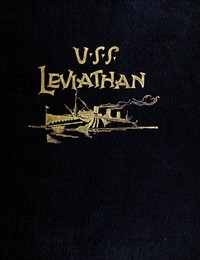
History of the U.S.S. Leviathan, cruiser and transport forces, United States Atlantic fleet Compiled from the ship's log and data gathered by the history committee — Story, Setting & Ideas
(0 User reviews)
2367
Project Gutenberg
2019
Not confirmed
Leviathan (Steamship); Vaterland (Steamship); World War, 1914-1918 -- Naval operations, American
Readers of public-domain and historical texts
Project Gutenberg digital edition
en
Edition facts
Words
66,613
Reading time
290 min
Text sections
9
For History of the U.S.S. Leviathan, cruiser and transport forces, United States Atlantic fleet Compiled from the ship's log and data gathered by the history committee — Story, Setting & Ideas, the stored edition analysis reports 66,613 words, 4 hr 50 min estimated reading time, and 9 detected text sections.
The text analysis averages about 12.9 words per sentence, while the detected sections provide another way to judge how the source is divided.
Project Gutenberg metadata also associates the work with “Leviathan (Steamship),” connecting these edition facts with the source record’s subject description.
Source:
Project Gutenberg record #59699
A committee-compiled history of the USS Leviathan during WWI, drawn from ship logs and crew data. The narrative shifts between official reports, commendations, and technical logs, revealing how the ship's voice changes from bureaucratic precision to operational urgency.
Editorial Edition Score
4.7/5
★★★★★
★★★★★
Calculated from edition completeness, EPUB availability, text structure and catalogue metadata. Not a user rating.
How this score is calculated
- Description quality20 pts
- Title & short description10 pts
- Source metadata20 pts
- Text length15 pts
- Chapters / structure15 pts
- EPUB file integrity20 pts
Total of 100 points, scaled to a 2.5-5.0 range. Editions with an empty description or a missing EPUB file are not scored.
Edition quality
Public-domain source text
Read the source text
The source text is kept in the dedicated reader, separate from this catalogue record and its commentary.
The History of the U.S.S. Leviathan opens with a poem, “Leviathan” by Adele M. Marshall, that personifies the ship as a “mighty monarch” and a “ship of state,” invoking divine protection for the troops it carries. This lyrical beginning contrasts sharply with the foreword’s matter-of-fact declaration that the book is “the story of the Leviathan’s part in the Great World’s War.” The committee’s compilation draws on the ship’s log and firsthand data, producing a text that oscillates between poetic tributes and dry administrative records.
From Lyric to Log: The Opening Voice
The book’s first voice is not that of a naval historian but a poet. Adele M. Marshall’s verses cast the Leviathan as a near-mythical figure, “Queen of the ocean’s vast domain,” while also acknowledging the human cost: “The prayers and sobs from broken hearts / Will follow as thy course is run.” This emotional register is immediately succeeded by the foreword’s clipped, official tone, which describes the ship’s seizure from German ownership and its commissioning “as a Naval vessel.” The juxtaposition is jarring: the reader moves from a plea for safe passage to a dry recitation of administrative dates. This shift in voice—from the elevated to the bureaucratic—establishes a pattern that recurs throughout the text, as the committee interleaves personal accounts, official memos, and statistical summaries.
The Language of Performance: Target Practice Reports
One of the most distinctive features of the History is its inclusion of detailed gunnery scores and commendations. The report of the first target practice, held November 27, 1917, notes “a choppy sea with a stiff wind blowing and an overcast sky,” conditions that made it “difficult to pick up the targets.” The language here is precise and observational, avoiding drama. The resulting score—78 shots fired, 63 hits, 75.42 percent—is presented without embellishment. Yet the memo from the Gunnery Officer that follows introduces a different tone: “The Gunnery Officer is highly pleased… Such accurate firing in action would almost surely put a submarine out of action in short order.” This is the voice of command, blending praise with operational confidence. Later practices show declining percentages (70.62 and 51.66), and the text attributes the drop to “unfavorable conditions as to weather and visibility” and a “high wind and a large swell.” The committee lets the numbers speak, but the shift from commendation to explanation marks a subtle change in narrative pace—from celebration to sober assessment.
Technical Challenges and the Pace of Preparation
The section on the electric plant reveals a different kind of narrative: the slow, frustrating work of making a seized German liner ready for war. The text notes that “there were absolutely no plans of circuits nor any descriptive matter of electrical apparatus,” forcing electricians to “trace out and locate circuits” from scratch. The language here is procedural, listing dates and personnel: “On August 13, 1917, the first Navy electrician reported for duty.” The pace is deliberate, mirroring the gradual takeover of the plant from civilian to Navy hands. This section contrasts with the brisk, event-driven accounts of submarine attacks (referenced only by date in Part II) and the terse target-practice scores. The committee’s decision to include such technical detail—and to let it unfold in a step-by-step chronology—gives the reader a sense of the ship’s transformation from a static vessel to a functioning warship, a process that required not just courage but methodical labor.
Readers should pay attention to how the committee handles transitions between different types of evidence: the poem, the log entries, the memos, and the technical reports. Each brings a distinct rhythm and vocabulary, and the book’s interest lies partly in how these voices coexist without editorial smoothing. The History is not a single narrative but a collage of documents, and its shifts in pace—from the slow crawl of electrical work to the sudden urgency of a submarine alarm—are worth noting as deliberate choices by the compilers.
That afternoon, rain drummed against the window while the Leviathan’s log grew taut with coded urgency, its machinery suddenly human. The same jolt of wartime tension surfaced later, almost by chance, in The Fighting Retreat To Paris — Inside the Classic, where the retreat’s chaos carries that identical breathless precision. I set one book down and simply picked up the other, as if both shared one quiet heartbeat.
There are no reviews for this eBook.
There are no comments for this eBook.
Reader reflection
How did this book work for you?
Your answers remain private and are stored only in this browser.
Your progress
0
/
10
2
How did the book work for you overall?
3
Would you recommend this book to another reader?
4
What was the reading difficulty like?
5
How strong was your personal connection to the text?
6
Which aspect of the book did you value most?
7
How would you describe its reading pace?
8
Do you expect to return to this book?
9
What did this book teach you most?
10