1

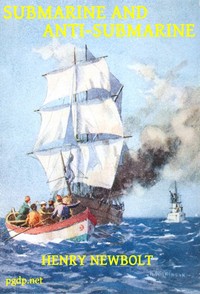
Submarine and Anti-submarine — Reading Companion
(0 User reviews)
489
Project Gutenberg
2016
Not confirmed
World War, 1914-1918 -- Naval operations -- Submarine; Submarines (Ships)
Readers of public-domain and historical texts
Project Gutenberg digital edition
en
Edition facts
Words
86,445
Reading time
376 min
Text sections
22
The source record for Submarine and Anti-submarine — Reading Companion measures this digital text at 86,445 words, 6 hr 16 min estimated reading time, and 22 detected text sections.
The text analysis averages about 21.5 words per sentence, while the detected sections provide another way to judge how the source is divided.
Project Gutenberg metadata also associates the work with “World War, 1914-1918 -- Naval operations -- Submarine,” connecting these edition facts with the source record’s subject description.
Source:
Project Gutenberg record #52425
An examination of submarine warfare in World War I, focusing on language, narrative voice, and shifts in pace from technical exposition to moral outrage, using specific incidents like the Lusitania sinking.
Editorial Edition Score
4.9/5
★★★★★
★★★★★
Calculated from edition completeness, EPUB availability, text structure and catalogue metadata. Not a user rating.
How this score is calculated
- Description quality20 pts
- Title & short description10 pts
- Source metadata20 pts
- Text length15 pts
- Chapters / structure15 pts
- EPUB file integrity20 pts
Total of 100 points, scaled to a 2.5-5.0 range. Editions with an empty description or a missing EPUB file are not scored.
Edition quality
Public-domain source text
Read the source text
The source text is kept in the dedicated reader, separate from this catalogue record and its commentary.
Henry Newbolt's Submarine and Anti-submarine opens with a striking shift in register: the first chapter, 'The Spirit of Submarine War,' moves from a measured, almost clinical tone to a blistering moral condemnation. The author catalogs German U-boat attacks with precise dates and casualty figures—the Tangistan, Fingal, Aguila, Falaba—before arriving at the Lusitania. Here the prose accelerates, piling details of the sinking: the calm sea, the 18-knot speed, the 1,134 lost. Newbolt then pivots to quote German newspapers celebrating the event with 'joyful pride,' a phrase he calls 'the mark of true savagery.' This alternation between factual recitation and indignant commentary defines the book's narrative voice.
From Technical Manual to Polemic
The book's structure reveals a deliberate change in pace and purpose. Early chapters—'The Evolution of the Submarine,' 'The Submarine of To-day'—read like a technical primer, describing hull designs, torpedo mechanisms, and operational ranges. The language is detached, almost instructional. But by Chapter X, 'The U-Boat Blockade,' the tone hardens. Newbolt begins listing sinkings without warning, and the sentences grow shorter, more staccato. The Falaba is 'stopped and torpedoed in cold blood'; the crew of the Aguila 'were fired upon while launching their boats.' The narrator no longer explains—he indicts.
This shift is not gradual but abrupt, mirroring the historical rupture Newbolt perceives: the transition from 'civilized' naval warfare to what he calls 'barbarian' tactics. The technical chapters provide a baseline of dispassionate expertise; the later chapters abandon that stance entirely. Readers should note how the same author who calmly describes a submarine's conning tower later describes German laughter at drowning victims. The contrast is the book's central rhetorical device.
The Voice of Outrage: Quotation as Evidence
Newbolt frequently embeds external voices to build his case. He quotes the New York Times calling the Falaba sinking 'perhaps the most shocking crime of the War.' He reproduces the German Embassy's warning to travelers, then notes that 'intending travellers smiled at this outrageous threat.' Most damningly, he cites the Kölnische Zeitung and Kölnische Volkszeitung—the latter a 'prominent Roman Catholic and patriotic paper'—expressing 'joyful pride' in the Lusitania attack. These quotations are not neutral; they are exhibits in a prosecution.
The narrator's own language escalates in response: 'half-witted wickedness,' 'true savagery,' 'unparalleled disgrace.' Yet Newbolt never abandons specificity. He notes that medals were struck, school holidays given, and subscriptions raised for the U-boat crew. The accumulation of concrete detail—the 37 killed out of 38 on the Tangistan, the stewardess and five men of the Fingal—anchors the outrage in verifiable fact. This technique gives the polemic a documentary weight it would otherwise lack.
Pace and the Accumulation of Atrocity
The narrative pace in the opening chapter is carefully controlled. Newbolt begins with a general statement—'a good deal of the information contained in this book will be new to the public'—then moves to a series of dated entries: March 9, March 15, March 27, March 28. Each entry adds a fresh horror, and the rhythm accelerates. By the time he reaches the Lusitania, the prose has become a drumbeat of dates and numbers: May 1, May 7, 2 P.M., 2.15, 2.36. The effect is cumulative, almost overwhelming.
This acceleration mirrors the historical escalation Newbolt describes: from warning to threat to mass murder. But the pace is not uniform across the book. Later chapters, such as 'Submarine v. War-ship' and 'War-ship v. Submarine,' return to a more measured, tactical analysis. Readers should attend to these shifts in tempo. They are not accidental; they signal changes in the author's rhetorical purpose—from explanation to accusation, from instruction to memorial. The book's emotional power derives from this alternation, not from any single passage.
Newbolt's book is best read as a hybrid: part technical history, part wartime polemic. The reader who expects a dry operational account will be startled by the moral fury of the first chapter; the reader who expects pure propaganda will find unexpected patience in the descriptions of submarine evolution. The key is to watch the narrator's voice—when it slows to explain, when it quickens to condemn. The illustrations by Norman Wilkinson, listed in the contents, offer a visual counterpart to this dual register: technical drawings of vessels alongside dramatic scenes of attack. Together, text and image create a document that is both a record and a reckoning.
I kept thinking about how that technical book suddenly turned furious—the dry language cracking open around the Lusitania. It reminded me of another quiet horror, the way "Back from hell" — Story, Setting & Ideas lingers. That one circled something similar in me: not the ships, but the shock of a normal day turning into a memory you can't set down.
There are no reviews for this eBook.
There are no comments for this eBook.
Reader reflection
How did this book work for you?
Your answers remain private and are stored only in this browser.
Your progress
0
/
10
2
How did the book work for you overall?
3
How likely are you to recommend this book?
4
Did the language feel accessible?
5
Did you relate to its people, ideas, or situations?
6
How did the pace of the book feel?
7
Did you gain anything practical from the text?
8
Could you see yourself revisiting this book?
9
In one sentence, what did you learn?
10