1

From the Rapidan to Richmond and the Spottsylvania Campaign A Sketch in Personal Narration of the Scenes a Soldier Saw — Context and Discussion
(0 User reviews)
116
Project Gutenberg
2010
Not confirmed
United States -- History -- Civil War, 1861-1865 -- Personal narratives, Confederate
Readers of public-domain and historical texts
Project Gutenberg digital edition
en
Edition facts
Words
60,793
Reading time
265 min
Text sections
7
The catalog record for From the Rapidan to Richmond and the Spottsylvania Campaign A Sketch in Personal Narration of the Scenes a Soldier Saw — Context and Discussion provides practical reading context through 60,793 words, 4 hr 25 min estimated reading time, and 7 detected text sections.
The text analysis averages about 21.2 words per sentence, while the detected sections provide another way to judge how the source is divided.
Project Gutenberg metadata also associates the work with “United States -- History -- Civil War, 1861-1865 -- Personal narratives, Confederate,” connecting these edition facts with the source record’s subject description.
Source:
Project Gutenberg record #31192
A Confederate artilleryman's firsthand account of the 1864 Overland Campaign, from the Rapidan to Richmond, focusing on the Battle of Spottsylvania. Based on journals written at the time, the narrative emphasizes personal encounters and daily life rather than grand strategy.
Editorial Edition Score
4.7/5
★★★★★
★★★★★
Calculated from edition completeness, EPUB availability, text structure and catalogue metadata. Not a user rating.
How this score is calculated
- Description quality20 pts
- Title & short description10 pts
- Source metadata20 pts
- Text length15 pts
- Chapters / structure15 pts
- EPUB file integrity20 pts
Total of 100 points, scaled to a 2.5-5.0 range. Editions with an empty description or a missing EPUB file are not scored.
Edition quality
Public-domain source text
Read the source text
The source text is kept in the dedicated reader, separate from this catalogue record and its commentary.
William Meade Dame, a private in the First Company of Richmond Howitzers, wrote this account of the 1864 Overland Campaign from journals he kept during the war. The narrative begins with the army crossing the Rapidan and follows through the Battle of Spottsylvania, ending near Richmond. Dame's perspective is that of an artilleryman, not a commander, and he focuses on what he saw and experienced rather than on tactical overviews.
The book opens with a meeting between the artillerymen and General J. E. B. Stuart, described in vivid detail: Stuart's 'long auburn beard,' his 'easy, graceful seat on the swift horse,' and his cheerful greeting, 'Good morning, boys! glad to see you.' This encounter sets the tone for a narrative that values personal interactions and specific moments over broad battle descriptions.
Personal Encounters Amid the Campaign
Dame's narrative is built around meetings with individuals, both famous and obscure. The encounter with Stuart is one of several such scenes. Later, Dame describes reuniting with his former teacher, Jesse Jones, now a cavalry officer 'covered with mud from the crown of his head to the soles of his feet.' He also meets his kinsman Lieutenant Robert Page, who had 'followed Stuart's feather from the start.' These meetings are not merely name-dropping; they are emotional moments that reveal the bonds among soldiers. Dame notes that 'the hand-clasps were very tight' and that 'the memories of home, of school, and boyhood' brought tears. The narrative thus conveys the war's human cost through these fleeting reunions, where friends and family meet 'on the edge of a bloody field.'
The Artilleryman's Perspective
Dame's role as a cannoneer shapes his observations. He describes the guns being 'drawn through the gate' and halted, ready for action. The ten-minute reprieve before battle is used to seek out friends among the cavalry. This focus on the artillery's movements and the brief pauses between action gives the narrative a specific rhythm. Dame does not attempt to describe the entire battlefield; instead, he records what is visible from his position. The reader learns about the campaign through the lens of a single battery, with details such as the sound of the bugle and the sight of Stuart cantering back. This limited viewpoint is a strength, offering a ground-level view that larger histories often miss.
Journals as the Source of Detail
Thomas Nelson Page's introduction notes that Dame told his story 'from his journals written on the spot.' This origin explains the immediacy of the descriptions. The narrative includes specific names, places, and even dialogue, such as Stuart's question, 'What troops are these?' and the reply, 'Richmond Howitzers, Longstreet's Corps.' Such details suggest that Dame recorded events soon after they occurred. The journals also account for the episodic structure: each encounter or event is a discrete memory. Readers should approach the book as a collection of scenes rather than a continuous story. The reliance on journals lends authenticity but also means that some periods may be omitted or compressed.
Dame's account is best read as a personal memoir rather than a comprehensive history. The narrative's strength lies in its specific, grounded details—the mud on a uniform, the tight handclasp, the sound of a familiar voice. Readers interested in the human experience of the Civil War will find this a valuable primary source. The book complements official histories by showing how ordinary soldiers lived and remembered the campaign.
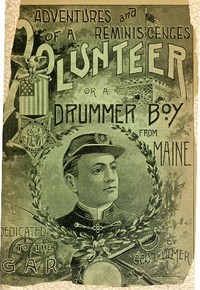
Reading this artilleryman’s quiet worry about mud and mail, I remembered my grandfather’s own letters — never battles, always bread. Then I found a similar tenderness in a drummer boy’s story, Adventures and Reminiscences of a Volunteer; Or, A Drummer Boy from Maine — Reading Companion, which felt less like history and more like sitting by a stove, listening to someone remember.
There are no reviews for this eBook.
There are no comments for this eBook.
Reader reflection
Before you leave, reflect on the book
Use these questions to collect your thoughts before moving on.
Your progress
0
/
10
2
How did the book work for you overall?
3
Is this a title you would suggest to others?
4
Did the language feel accessible?
5
Was the book what you thought it would be?
6
How closely did the book connect with your experience?
7
How useful were the ideas in this book?
8
Did this book create an emotional response?
9
What is the main idea you are taking away?
10