1

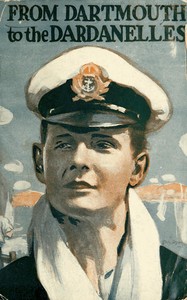
From Dartmouth to the Dardanelles: A Midshipman's Log — Reading Notes
(0 User reviews)
1116
Project Gutenberg
2015
Not confirmed
World War, 1914-1918 -- Personal narratives, English
Readers of public-domain and historical texts
Project Gutenberg digital edition
en
Edition facts
Words
33,687
Reading time
147 min
Text sections
18
From Dartmouth to the Dardanelles: A Midshipman's Log — Reading Notes can be approached with a clearer sense of reading commitment from its source measurements: 33,687 words, 2 hr 27 min estimated reading time, and 18 detected text sections.
The text analysis averages about 24.5 words per sentence, while the detected sections provide another way to judge how the source is divided.
Project Gutenberg metadata also associates the work with “World War, 1914-1918 -- Personal narratives, English,” connecting these edition facts with the source record’s subject description.
Source:
Project Gutenberg record #49243
A midshipman's firsthand account of ten months in the Great War, compiled from memory after his ship was sunk, covering daily life, naval operations, and observations from Dartmouth to the Dardanelles.
Editorial Edition Score
4.7/5
★★★★★
★★★★★
Calculated from edition completeness, EPUB availability, text structure and catalogue metadata. Not a user rating.
How this score is calculated
- Description quality20 pts
- Title & short description10 pts
- Source metadata20 pts
- Text length15 pts
- Chapters / structure15 pts
- EPUB file integrity20 pts
Total of 100 points, scaled to a 2.5-5.0 range. Editions with an empty description or a missing EPUB file are not scored.
Edition quality
Read the Text
glish Channel, and early the following morning passed up the Straits of Dover.
A little before noon on the succeeding day, the 22nd of August, we passed the United States cruiser _Carolina_ returning from Antwerp with citizens of the States, flying from the oncoming Huns, and at 8 o’clock we dropped anchor in Ostend outer roads.
Half an hour later a Belgian steamer, a big two-funnelled, cross-channel boat, came alongside. Our party of marines, with their officers and equipment, were transferred to her, and she shoved off for the shore.
In the inner roads were lying at this time a squadron of battle-ships from the 2nd Fleet, an aeroplane base ship, and a flotilla of destroyers. This squadron weighed anchor next morning and proceeded to sea, and shortly afterwards we weighed and moved into the inner roads. An airship was sighted at about 11 o’clock low down on the horizon, and our anti-aerial firing party fell in with loaded rifles on the quarter-deck, and the anti-aerial three-pounder was manned.
Tense excitement prevailed for about half-an-hour, while the imagined Zeppelin grew gradually larger and larger, and nearer and nearer; but it turned out to be our own _Astra Torres_, so the firing party dismissed and the ordinary routine was carried on, while the airship flew above us, and came to rest in a field to the left of Ostend.
In the afternoon an aeroplane, flying no flag, appeared over the town, and was promptly fired at.
Subsequently it transpired that this, too, was one of our own, though I cannot imagine why she carried no distinguishing mark, and her celebrated pilot was reported to have used some very strong language about the marines who had forced him to a hasty and undignified descent. It was his own fault, anyway—and, luckily, neither machine nor airman sustained any serious damage.
Later on one of our destroyers came alongside for provisions and oil, and remained alongside all that night.
Next morning a flotilla of enemy submarines and destroyers appeared upon the horizon. All our ships got ready to weigh, and our destroyers and light cruisers went out post haste to drive them off. The enemy squadron at once turned tail and fled! All of us midshipmen and cadets, who were not on duty, climbed up to the foretop with telescopes, and watched the pursuit, but only a few shots were exchanged, and neither side sustained any damage. The enemy made all haste in the direction of Heligoland, and our flotilla returned after a fruitless chase.
On that afternoon I remember that I witnessed, from the quarter-deck, a sad accident. Our picket boat had gone out with those of the other ships to sweep for any mines that might have been laid. In the evening the boat returned, and came alongside the port side amidships. There was a heavy sea running, and, as a wave lifted the boat, a reel of wire hawser used for mine sweeping, which had been placed in the bows, got caught in the net shelf, and was left fixed there as the boat descended into the trough of the sea. Next time she rose one of the bowmen got his leg caught under the reel, and it broke just above the ankle. He fell to the deck, but before he could be snatched out of danger, the sharp edge of the reel again caught his leg three inches above the break and half severed it, and the next time the boat rose it caught him again in the same place, and cut his leg right through.
A stretcher was lowered over the side and the injured man was carried quickly and carefully down to the sick bay, where it was found on examination that the limb was so mangled that it was necessary to amputate it just above the knee. Poor chap! that was the end of his war-service. It was a tragic and sickening thing to witness, but it was no one’s fault. In fact, the court of inquiry subsequently held brought in a verdict of “accidental injury,” and absolved all concerned from any blame in the matter.
The following afternoon we took on board a detachment of 800 marines with their equipment, and shortly afterwards weighed anchor and steamed out of Ostend roads.
When we went to night-defence stations at 8 o’clock that night there were marines all over the place—sleeping on the deck, and in the battery, and, in fact, anywhere there was room to lie down. We came across two sergeants who had been drill-instructors at Osborne College when we were there, and had a yarn with them over old times.
About 9 o’clock rapid firing was heard on our starboard bow.
This book is a compilation of a midshipman's narrative written during sick leave in December 1915, after his diaries were lost when his ship was sunk. The editor, his mother, notes that names of officers and ships have been suppressed and midshipmen's names are fictitious. The foreword explicitly states the text makes no claim to literary merit, being simply a boy's story of ten months of the Great War as he saw it. The excerpts reveal a focus on practical details of shipboard life, navigation challenges, and interactions with local ports, rather than combat.
Editorial Framing and Authenticity
The foreword, written by the midshipman's mother, establishes the book's origin: a narrative written from memory after all diaries were lost. She acknowledges that some words and phrases may seem beyond a boy of barely sixteen, but insists the ideas and opinions are faithfully reproduced. This editorial intervention raises questions about how much the text reflects the midshipman's original voice versus the mother's shaping. The suppression of real names and the claim that the book was initially for private circulation suggest a tension between the Navy's tradition of silence and the desire to share the experience.
Daily Life and Naval Routine
The excerpts depict a world of constant small tasks: anchoring, mooring, coaling, and lowering boats. A detailed account of mooring at Aden describes the stern swinging nearly aground, the crew struggling with a wire hawser, and the careful process of heaving it taut. Coaling is a messy affair, with the wind shifting and covering everyone in coal dust. The midshipman's tone is matter-of-fact, focusing on the practical challenges rather than any sense of danger or glory. The narrative includes observations of local scenery, such as Aden's barren rocks and pagoda-style architecture, but always returns to the ship's operations.
Hunt for the German Cruiser
A significant portion of the excerpt describes the search for a German cruiser. The ship stops at a port for Mecca, lowering a pinnace to investigate a steamer, which turns out to be a British cargo boat. The British consul, described as a sly Arab, denies the German ship was there. The midshipman records the disappointment and the feeling that it was time for something other than mere voyaging. Later, they sight another British ship and chase a steamer in the Gulf of Aden. This episode illustrates the tedium and uncertainty of naval patrols early in the war, with the enemy remaining elusive.
Readers should approach this text as a curated memory, shaped by both the young author's perspective and his mother's editorial choices. The focus on routine and logistics offers a ground-level view of naval life, but the absence of major battles or personal reflection may leave some wanting. The book is best read as a document of a particular moment, capturing the voice of a very young officer in a vast conflict.
Reading about that midshipman’s quiet, unglamorous war duty brought back a Sunday afternoon years ago, when I sat with Days to Remember: The British Empire in the Great War — Reading Companion and felt the same ache of ordinary days carrying extraordinary weight. Both books left me thinking how much of history is just weather, waiting, and small endurance.
There are no reviews for this eBook.
There are no comments for this eBook.
Reader reflection
How will you remember this book?
Save your reaction, strongest insight, and memorable passage.
Your progress
0
/
10
2
What was your overall reaction to the book?
3
How likely are you to recommend this book?
4
How easy was the book to follow?
5
Did any part of the book stay with you emotionally?
6
Would this book work well in a reading group?
7
How original did the book feel?
8
Do you expect to return to this book?
9
What did this book teach you most?
10